
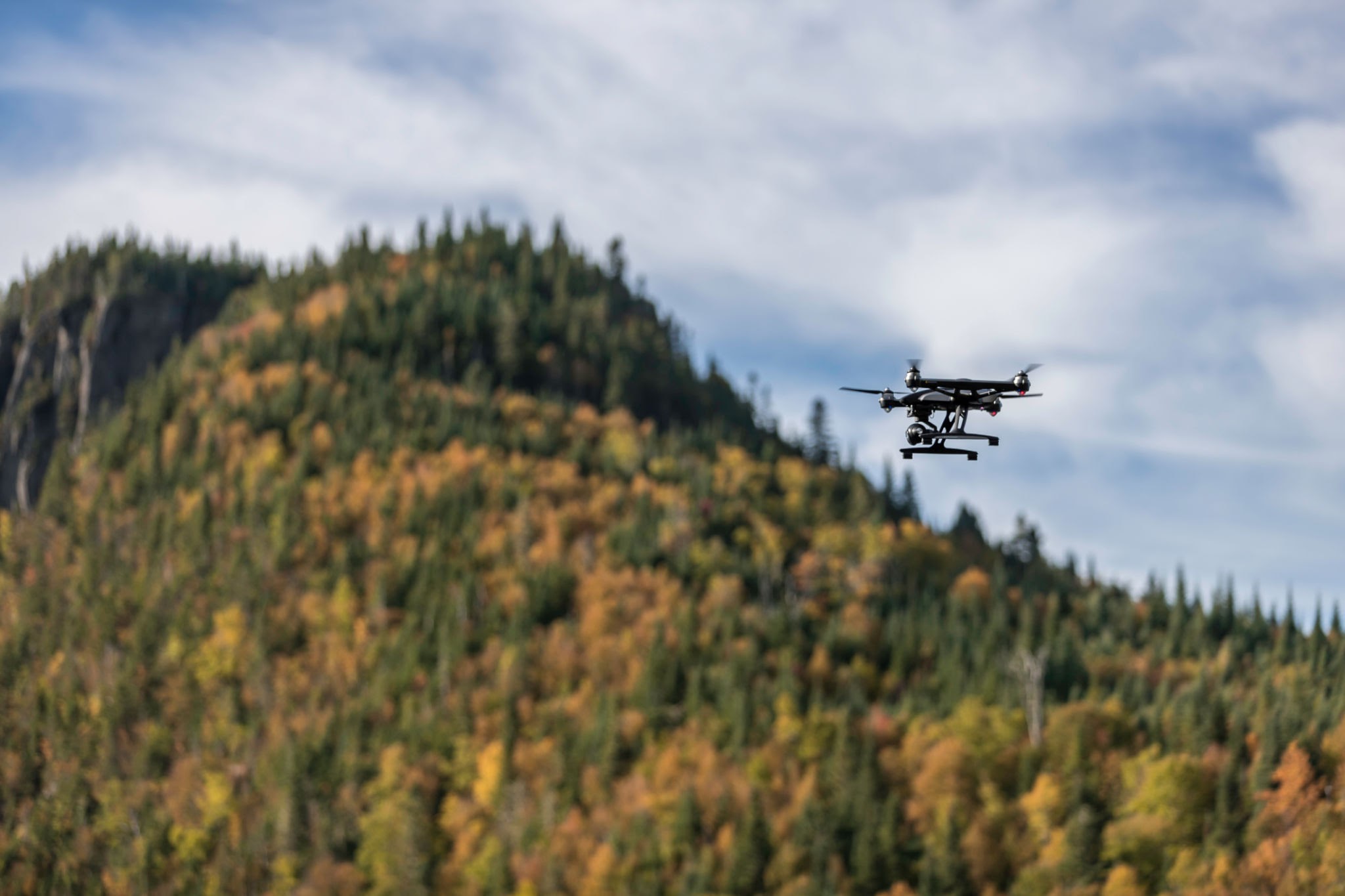
Forests are the lungs of the earth, critical carbon sinks, and the foundation of global biodiversity. Yet, for decades, monitoring and managing these massive, remote ecosystems was an impossible challenge. Conservationists relied on manual foot patrols, localized sampling, and delayed satellite imagery to combat illegal logging, track wildlife populations, and prevent catastrophic wildfires. The sheer scale of the wilderness always gave the advantage to destruction over preservation.
Today, technology is flipping that dynamic. Forestry and Conservation Tech is deploying a vast network of autonomous drones, acoustic sensors, and artificial intelligence to create a real-time, digital nervous system for the natural world. This transition allows us to monitor ecosystem health, verify sustainable practices, and aggressively protect protected areas with unprecedented speed and accuracy.
LiDAR and 3D Canopy Mapping
Understanding a forest requires more than just looking at a flat, top-down satellite image. To accurately measure carbon sequestration and ecosystem health, scientists need to see the entire 3D structure of the canopy.
- Drone-Based LiDAR: Conservationists deploy drones equipped with Light Detection and Ranging (LiDAR) sensors. These sensors fire millions of laser pulses per second down through the leaves, measuring the exact time it takes for the light to bounce back.
- Biomass Calculation: This generates a hyper-accurate, 3D point-cloud map of the forest structure, revealing the exact height, density, and volume of the trees. AI algorithms use this structural data to calculate the precise amount of carbon physically stored within a specific acre of forest, providing the undeniable, verifiable data required for the global carbon credit market.
- Disease and Stress Detection: Using multi-spectral cameras alongside LiDAR, drones can detect subtle changes in chlorophyll levels. This allows foresters to identify a localized outbreak of an invasive pest or a cluster of drought-stressed trees weeks before the damage is visible to the naked human eye, enabling rapid, targeted intervention.
Bio-Acoustic AI and Ecosystem Monitoring
You cannot always see the health of a jungle through the dense foliage, but you can hear it. Bio-acoustics turns the ambient noise of a forest into a readable data stream.
- The Connected Forest: Researchers strap rugged, solar-powered acoustic sensors high in the tree canopy across thousands of miles of remote rainforest. These devices record the ambient soundscape 24/7 and transmit the audio via satellite networks.
- Algorithmic Identification: Deep learning algorithms process this massive audio feed, trained to identify the specific acoustic signatures of thousands of different species. The AI can instantly map the migration patterns of rare birds, estimate the population density of elusive primates, and track the overall biodiversity index of the ecosystem simply by listening.
- Chainsaw Detection: These same acoustic sensors act as an early warning system against illegal logging. If the AI detects the specific frequency of a chainsaw or a diesel truck engine in a protected reserve, it instantly triangulates the coordinates and alerts local rangers in real-time, allowing them to intercept the loggers while the crime is in progress.
Anti-Poaching Drone Networks
Protecting endangered megafauna—like rhinos and elephants—across vast, harsh terrains is a logistical nightmare for underfunded ranger teams.
- Thermal Overwatch: Conservation groups are deploying autonomous, fixed-wing drones to patrol national parks at night, when the majority of poaching occurs. Equipped with military-grade thermal imaging cameras, these drones fly miles above the ground, scanning the dark savannah for the heat signatures of humans or vehicles where they shouldn't be.
- Predictive AI Patrols: Instead of randomly patrolling thousands of square miles, rangers use predictive analytics. AI models analyze historical poaching data, lunar cycles, weather patterns, and the real-time movement of tagged animal herds to forecast exactly where poachers are most likely to strike next, allowing rangers to pre-deploy and set up ambushes.
Blockchain and Sustainable Timber
Illegal logging deforests critical habitats and undercuts the legal timber market. Ensuring that a piece of wood came from a sustainably managed forest has historically relied on easily forged paper certificates.
- Digital Provenance: The timber industry is moving to blockchain tracking. When a tree is legally harvested, it is tagged with a digital identifier (often a physical QR code or an RFID nail).
- Immutable Tracking: As that wood moves from the forest to the sawmill, to the furniture manufacturer, and finally to the retail store, every step is recorded on an immutable blockchain ledger. A consumer buying a dining table can scan the tag and see the exact GPS coordinates of the stump it came from, guaranteeing they are not funding illegal deforestation.
The Outlook
Technology is granting the natural world a digital voice and an automated shield. By leveraging AI, drones, and acoustic monitoring, conservation is shifting from a reactive, under-resourced struggle into a proactive, data-driven science. Forestry Tech proves that human innovation does not always have to be at odds with nature; it can be the very tool that saves it.





Comments