
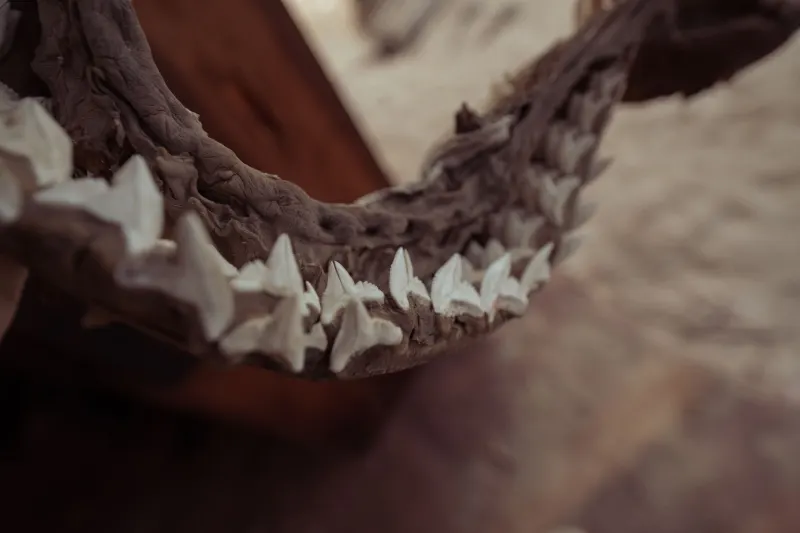
A routine geological survey in southern Thailand has led to the identification of a massive prehistoric rodent species that weighed roughly 66 pounds. In 2004, geologist Pannipa Tian was working at the Bang Mark Pit, a coal mine located in the Krabi province, when she noticed an unusual cream-colored object protruding from the dark veins of coal. Initially believing the specimen was a bone, Tian later learned from her supervisor that the 2-inch fossilized fragment was actually a giant rat's incisor. A large dark molar was discovered at the mine on that exact same day.
Key takeaways
- Geologist Pannipa Tian discovered a 2-inch fossilized incisor and a molar at the Bang Mark Pit in Krabi in 2004.
- The newly identified species, Yakamys sirindhornae, weighed roughly 33 kilograms or 66 pounds.
- The creature lived during the Late Eocene, roughly 33 to 35 million years ago.
- The discovery suggests exceptionally large rodents had already evolved in Asia well before South American groups diversified.
Uncovering a Prehistoric Giant
An international team of researchers from Thailand, France, and Canada ultimately determined that the two fossilized teeth belonged to a previously unknown species. They named the creature Yakamys sirindhornae, identifying it as a member of the extinct Ischyromyidae family. This group of sometimes squirrel-like prehistoric rodents reached their largest known size thanks to this specific discovery. Back when it lumbered through the region during the Late Eocene, Yakamys sirindhornae was roughly equivalent in size to a beaver, though smaller than South America's capybara, which holds the title of the largest living rodent species today.
While the research team noted they could not definitively determine much about the giant rodent's behavior from two teeth alone, the sediment layers offer clues. The fossils were pulled from ancient lake sediment at the Krabi coal mine, suggesting the animal may have occupied a lakeside ecological niche comparable to the extant capybara. The authors wrote that this lake-margin habitat is broadly consistent with the ecological hypothesis proposed for Manitsha tanka, a giant Oligocene rodent first described in 1941 from a fossil found in South Dakota. However, the researchers cautioned that the sedimentary context alone does not definitively prove a semi-aquatic lifestyle.
Broader Implications for Asian Paleontology
The Krabi Basin has previously yielded several species of ancient primates, and researchers also described an extinct alligator named Alligator munensis from a fossil found in northeastern Thailand. Furthermore, scientists described an extinct relative of rhinos named Eomoropus meridiorientalis in 2021 from fossils found at the exact same Krabi coal mine, where the Electricity Generating Authority of Thailand granted access. Despite the broad distribution of fossilized rodents globally, the Asian fossil record has remained comparatively sparse and primarily dominated by relatively small-bodied taxa, especially across China and India.
The discovery of Yakamys sirindhornae challenges previous assumptions regarding the global evolution of rodents by proving that exceptionally large species had already emerged in Asia during the late Eocene. The researchers also hinted at the possibility of discovering even older large rodents in Southeast Asia's fossil record, pointing to an unpublished find inside Myanmar's Pondaung Formation. That late middle Eocene find consists of an isolated rodent incisor that may belong to a species comparable in size to Yakamys, indicating that regional fossil records may contain evidence of large-bodied rodents predating the Thai discovery.





Comments