
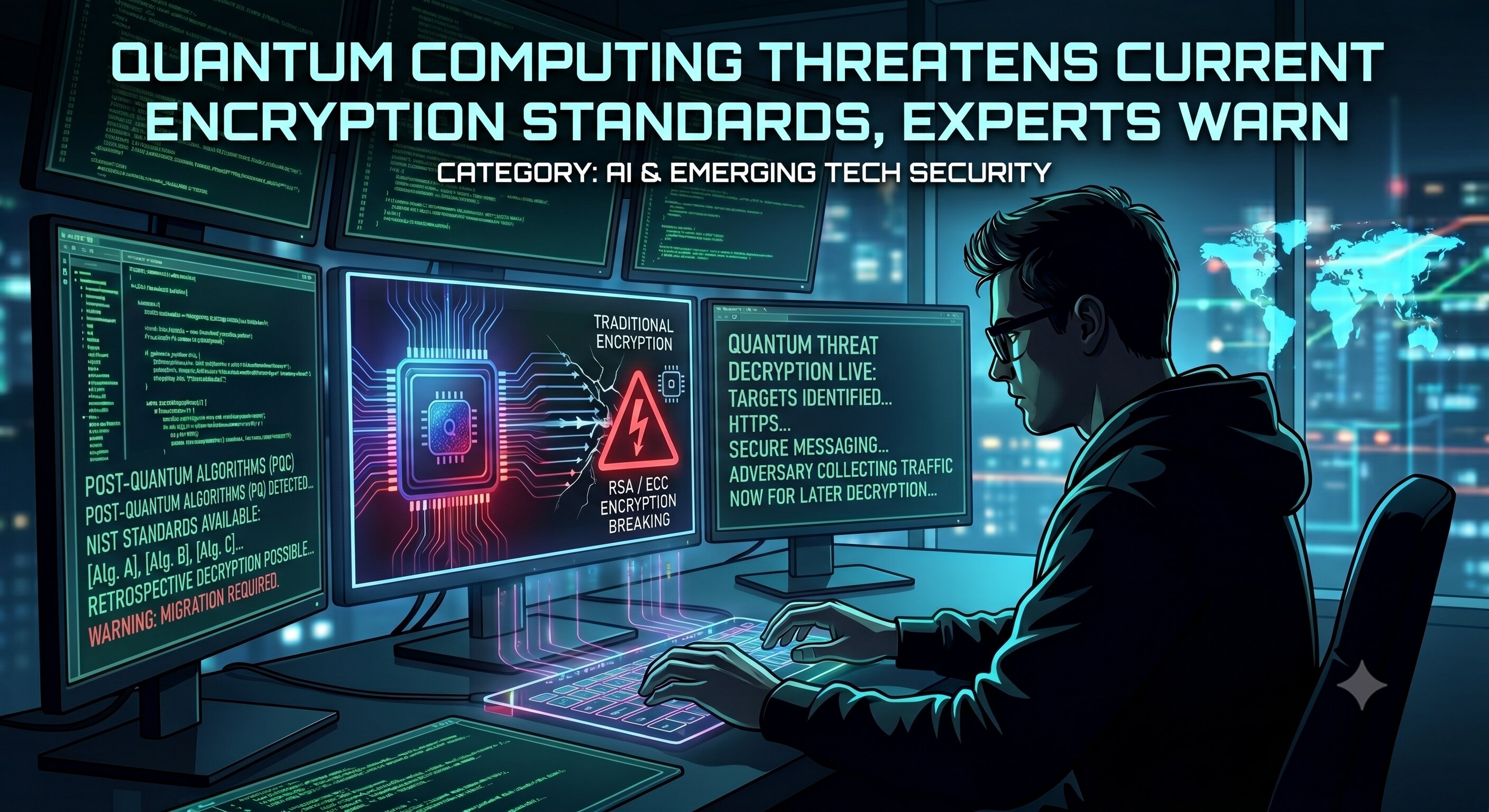
Quantum Computing
Threatens Current Encryption Standards, Experts Warn
Category:
AI & Emerging Tech Security
Leading
cryptographers and cybersecurity experts are issuing increasingly urgent
warnings that the advent of sufficiently powerful quantum computers could
render the encryption algorithms currently protecting the world's most
sensitive communications and data fundamentally insecure. While most estimates
suggest such a capability is still years away, the warnings are growing louder
as quantum computing milestones are reached with increasing frequency.
The concern
centers on a quantum algorithm known as Shor's algorithm, which could
theoretically break the RSA and elliptic curve cryptography systems that form
the backbone of modern internet security, including HTTPS, digital signatures,
and secure messaging. Organizations storing encrypted data today could also
face a retrospective threat if adversaries are collecting encrypted traffic now
with the intention of decrypting it once quantum computers become powerful
enough.
"The
time to act is now, not when quantum computers capable of breaking encryption
actually exist," warned Dr. Fatima Zahra, a cryptography professor at a
leading technical university. "Migrating to quantum-resistant cryptography
is a massive undertaking that will take years, and organizations that wait too
long will be too late."
The National
Institute of Standards and Technology (NIST) has finalized several post-quantum
cryptographic algorithms designed to be resistant to both classical and quantum
computing attacks. Organizations are being urged to begin planning their
migration to these new standards immediately, starting with their most
sensitive and long-lived data.





Comments