
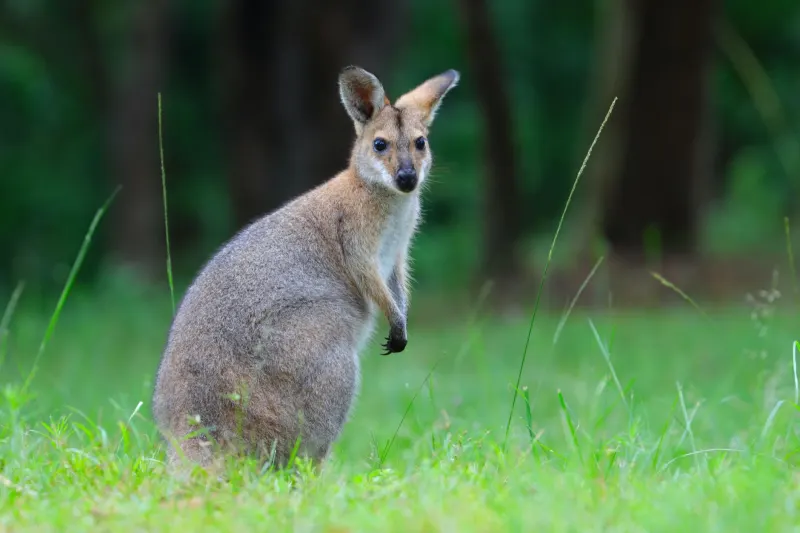
Western Australian police have officially issued a $200 fine to a 29-year-old man after a photograph circulated widely across the internet showing a protected quokka with a vape device in its mouth. The controversial incident occurred on Rottnest Island on November 2, 2026, according to local media reports, and quickly drew the direct attention of law enforcement agencies monitoring online platforms. The perpetrator received what is formally designated as a Rottnest Island Authority Infringement following the digital uproar.
Quokkas are a distinct species of tiny marsupials heavily populated across Rottnest Island and are internationally celebrated for their perpetually smiling appearance and generally approachable demeanor. However, despite their friendly reputation toward humans, these animals remain strictly protected under both Australian federal and state legislative frameworks. Touching, feeding, or otherwise interfering with the wildlife is strictly illegal, and local regulations carry severe consequences for violators.
Key takeaways
- A 29-year-old man was issued a $200 Rottnest Island Authority Infringement.
- The alleged offense took place on Rottnest Island on November 2, 2026.
- Quokkas are legally protected under both Australian federal and state conservation laws.
- Western Australia Premier Roger Cook strongly condemned the act, expressing total disgust.
Legal frameworks and wildlife protection rules
Existing conservation rules surrounding the management of Rottnest Island wildlife clearly dictate that human interference is prohibited. Penalties for violating these protections vary depending on the specific nature of the offense, ranging from an immediate $200 fine and forced removal from the island to severe conservation law violations carrying monetary penalties of up to $10,000. While casual photography from a distance remains permissible provided the marsupial stays calm and approaches voluntarily, any form of harassment is strictly forbidden by authorities.
Animal welfare experts have previously noted that casual photography of a comfortable quokka showing no signs of distress is generally acceptable. Mammal expert Christine Cooper explained to the BBC that researchers and conservationists simply want to avoid situations where humans actively chase or harass the animals for a picture. It remains completely unclear from the recent photograph whether the individual intentionally forced the wild animal to inhale vapor or if the quokka simply bit the device on its own. Local tourism guides regularly warn visitors that quokkas, particularly those conditioned to associate humans with food items, can occasionally bite.
Broader context of local animal cruelty
The incident ignited swift condemnation from regional leadership, with Western Australia Premier Roger Cook publicly stating that he felt completely disgusted by the behavior. Premier Cook explicitly connected this event to a separate, highly publicized animal cruelty case involving two teenagers. In that tragic case, investigators alleged that the teens forced a black swan to inhale vape smoke and physically slapped another swan, which subsequently became unresponsive and was later found dead by authorities. One of the teenagers involved in the swan cruelty case was formally convicted in September 2026, highlighting an ongoing regional crackdown on the abuse of local wildlife.



Comments