
For the first sixty years of spaceflight, the narrative was defined by massive, slow-moving, government-funded agencies executing monolithic missions driven by geopolitical prestige. The cost of escaping Earth’s gravity well was so astronomically high that only superpowers could play the game. Today, the space sector has been violently disrupted.
We have entered the "NewSpace" era—a period defined by ruthless commercialization, rapid technological iteration, and the privatization of orbit. By solving the physics of reusability, developing autonomous orbital rendezvous systems, and miniaturizing satellite technology, tech companies have slashed the cost of space access. We are no longer just exploring space; we are actively industrializing it.
Reusable Launch Vehicles (RLVs): Defeating the Gravity Well
The fundamental economic flaw of early spaceflight was that rockets were treated like ammunition—used once and thrown into the ocean. Imagine flying a Boeing 747 from New York to London and then sinking it; ticket prices would be billions of dollars.
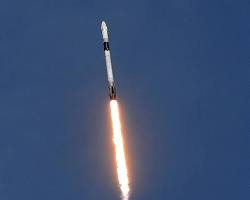
- Propulsive Landing: Companies like SpaceX completely altered orbital economics by developing orbital-class rockets that land themselves. By utilizing advanced grid fins for aerodynamic steering, massive internal gyroscopes, and AI-driven throttle algorithms, the first stage of a Falcon 9 or Starship rocket can re-enter the atmosphere and execute a pinpoint, propulsive landing on a drone ship in the middle of the ocean.
- The Collapse of Cost: This reusability has caused a spectacular collapse in launch costs. In the Space Shuttle era, putting a single kilogram of payload into Low Earth Orbit (LEO) cost roughly $54,000. Today, on a reusable Falcon Heavy, that cost is rapidly approaching $1,000 per kilogram, fundamentally opening up orbit to universities, medium-sized corporations, and commercial R&D labs.
Orbital Manufacturing: The Zero-G Factory
For decades, we have manufactured things on Earth to be used in space. The next trillion-dollar industry is manufacturing things in space to be used on Earth, leveraging the unique properties of microgravity and a hard vacuum.
- ZBLAN Optical Fibers: Traditional silica fiber-optic cables manufactured on Earth suffer from microscopic crystal impurities caused by gravity pulling on the molten glass, which degrades the light signal over long distances. When manufactured in the zero-gravity environment of the International Space Station, a fluoride-based glass called ZBLAN forms perfectly, theoretically capable of transmitting data 10 to 100 times faster than current terrestrial fiber optics.
- 3D Bioprinting Organs: On Earth, 3D bioprinting complex human organs often fails because the soft tissue collapses under its own weight before the cellular structure can bond. In microgravity, bioprinters can suspend living cells in 3D space, allowing scientists to print complex vascular networks and organ tissues without the need for toxic scaffolding, moving us closer to off-world organ manufacturing for transplant patients.
Space-Based Edge Computing
Historically, satellites were relatively "dumb" mirrors. A spy satellite or weather satellite would take massive amounts of raw optical data and slowly beam it all back down to a ground station on Earth, where supercomputers would spend days processing the imagery.
- Orbital AI: The new generation of satellites are equipped with onboard AI and "edge computing" processors. Instead of sending down raw, uncompressed video of a sprawling forest, the satellite’s onboard AI processes the data in orbit, identifies the exact coordinates of a starting wildfire, and instantly beams just those coordinates directly to a local fire department's server in seconds.
- Inter-Satellite Mesh Networks: Modern mega-constellations rely on optical laser links to talk to each other in the vacuum of space. If a satellite over the Pacific Ocean detects a maritime emergency, it doesn't need to wait until it orbits over a ground station; it uses high-speed lasers to bounce the data across a continuous mesh network of satellites until it reaches a node directly over the relevant rescue agency.
In-Situ Resource Utilization (ISRU) and Asteroid Mining
As humanity plans long-term habitats on the Moon and missions to Mars, we cannot afford to launch all our supplies from Earth. We must learn to live off the land—a concept known as ISRU.
- Lunar Ice and Propellant: The discovery of massive water-ice deposits at the lunar south pole changes everything. Autonomous rovers are being designed to mine this ice, melt it, and use solar-powered electrolysis to split the water into hydrogen and oxygen. This means the Moon can serve as a massive, low-gravity orbital gas station, where deep-space vessels can refuel before heading to Mars.
- Asteroid Extraction Robotics: Near-Earth Asteroids contain staggering concentrations of platinum-group metals, cobalt, and nickel—resources rapidly depleting on Earth but desperately needed for battery tech. Commercial startups are developing autonomous, solar-powered extraction craft designed to match the spin of an asteroid, anchor themselves to the surface, and use directed solar heat to literally bake the water and precious metals out of the rock.
The Outlook
Space is transitioning from a domain of pure scientific curiosity into a vibrant, commercial extension of the global economy. By lowering the cost of access and capitalizing on the unique physical environment of orbit, SpaceTech is not just pushing the boundaries of human exploration; it is laying the logistical and economic groundwork for humanity's eventual transition into a multi-planetary species.





Comments