
The global food system is at a breaking point. Traditional agriculture and livestock farming consume massive amounts of freshwater, generate significant greenhouse gas emissions, and require vast tracts of arable land that we simply no longer have. To feed a projected population of nearly 10 billion by 2050 without triggering ecological collapse, we cannot just farm better; we have to fundamentally reinvent how food is created.
Food Technology (FoodTech) is moving food production out of the slaughterhouse and the soil, and into the laboratory and the algorithm. From meat grown from cells to AI predicting entirely new flavor profiles, the sector is engineering a food system that is more resilient, sustainable, and scalable.
Cellular Agriculture: Meat Without the Animal
The most disruptive innovation in FoodTech is cultivated (or lab-grown) meat. This is not a plant-based alternative like a black bean burger; it is biologically identical animal meat, produced without raising or slaughtering a single animal.
- The Bioreactor Process: Scientists take a small, harmless biopsy of stem cells from a living animal (like a cow or a chicken). These cells are placed into a bioreactor—a massive steel tank resembling a brewery—and fed a nutrient-rich broth of amino acids, sugars, and vitamins. The cells multiply exponentially and differentiate into muscle and fat tissue.
- Environmental Impact: Cultivated meat has the potential to reduce land use by over 90% and water use by over 80% compared to traditional livestock farming. It also eliminates the need for the preventative antibiotics that run rampant in factory farming, drastically reducing the threat of zoonotic diseases and antibiotic resistance.
- Scaling Up: The technology is proven, and regulatory bodies (like the FDA in the US and the SFA in Singapore) have begun approving cultivated chicken for human consumption. The current challenge is purely engineering: scaling up bioreactor capacity to bring the cost per pound down to parity with traditional ground beef.
Precision Fermentation for Dairy and Egg Proteins
While cellular agriculture builds tissue, precision fermentation uses microbes as microscopic factories to produce specific animal proteins.
- Reprogramming Microbes: Scientists insert the specific DNA sequence that codes for a cow’s whey protein or a chicken’s egg white protein into a microbe, such as yeast or fungi.
- Brewing Dairy: These microbes are fermented in large tanks, where they consume sugars and excrete the exact target protein. The proteins are then filtered out and dried into a powder. This allows companies to create real dairy ice cream, cheese, and milk that melts and tastes exactly like the traditional product, but is entirely animal-free and lactose-free.
AI Flavor Profiling and Product Development
Creating compelling alternative foods requires masking off-flavors and perfectly mimicking the complex sensory experience of traditional foods. AI is accelerating this process.
- Mapping the Human Palate: Companies like NotCo use proprietary AI algorithms to map thousands of plant-based ingredients down to their molecular level. The AI analyzes how these molecules interact with human taste receptors and olfactory senses.
- Algorithmic Recipes: If a food scientist wants to create a plant-based milk that behaves like cow's milk in coffee, they input the target parameters. The AI might suggest an incredibly counter-intuitive recipe—combining pineapple, cabbage, and chicory root—because, at a molecular level, the combination of those specific plant compounds perfectly mimics the taste, texture, and foaming properties of dairy.
Ghost Kitchens and Robotic Automation
The economics of the restaurant industry—high rent, massive labor shortages, and thin margins—are driving rapid automation in food preparation and delivery.
- The Cloud Kitchen Model: "Ghost kitchens" are commercial cooking facilities with no dining room, no waitstaff, and no storefront. They exist entirely to fulfill online delivery orders (via UberEats or DoorDash). A single massive ghost kitchen facility might house the cooking operations for ten different digital restaurant brands, drastically reducing overhead costs.
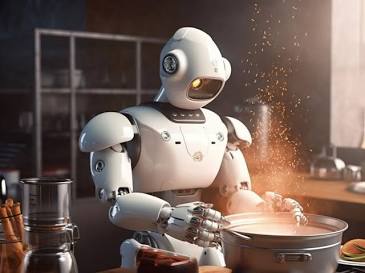
- Robotic Chefs: Fast-food chains and commercial kitchens are deploying robotic arms to handle repetitive, hazardous tasks. Robots like "Flippy" use computer vision and thermal sensors to man the deep fryers, ensuring perfectly cooked fries and chicken tenders every time without the risk of burn injuries to human workers.
- Automated Assembly: Automated makelines are being deployed for foods like pizzas and salads. A digital order comes in, and a robotic system perfectly portions the dough, sauce, cheese, and toppings in seconds, ensuring absolute consistency and reducing food waste caused by human error.
The Outlook
The future of food is synthetic, sustainable, and highly engineered. FoodTech is proving that humanity can decouple the creation of high-quality protein and complex flavors from the devastating environmental impact of traditional industrial agriculture.





Comments