
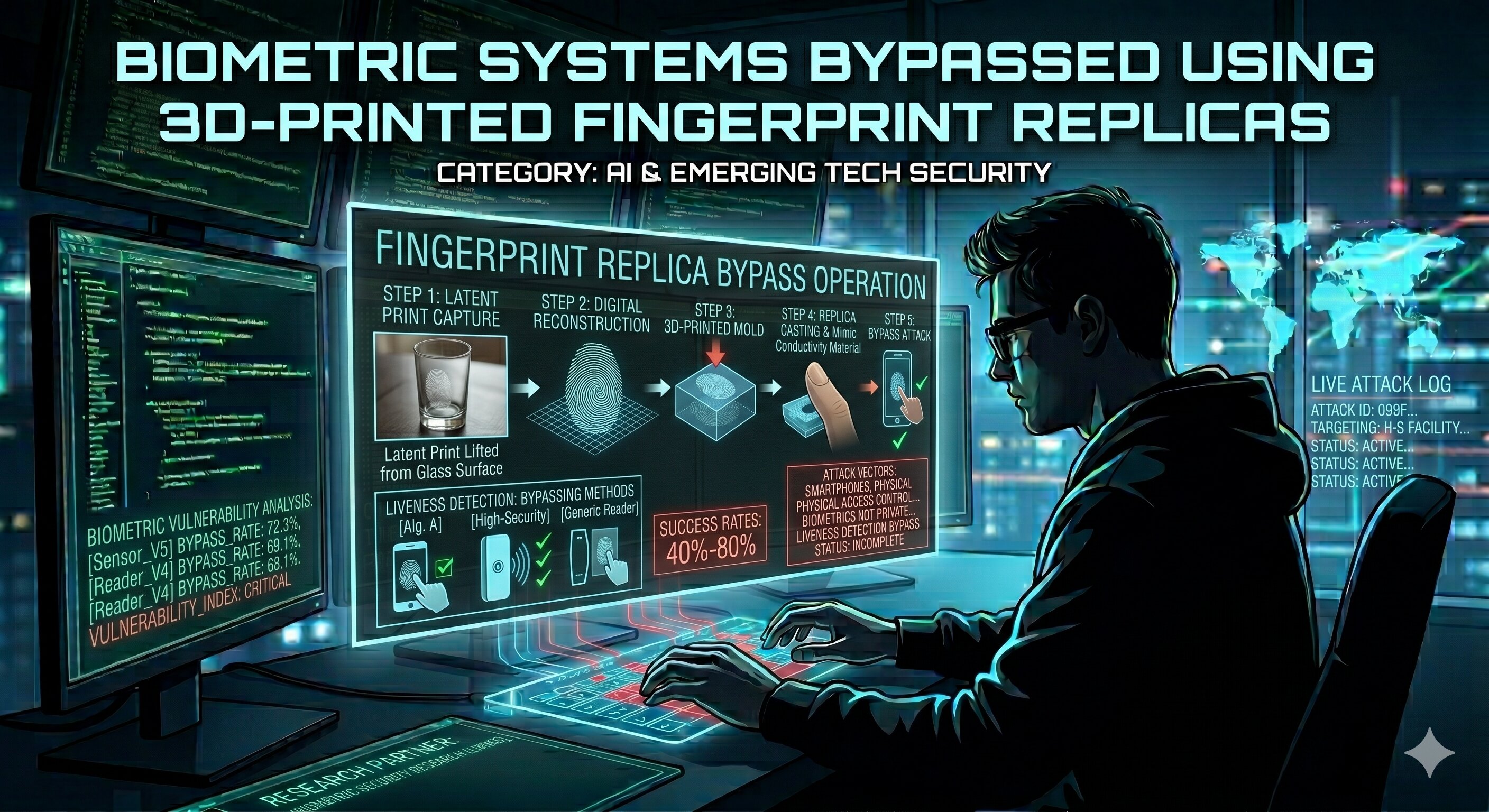
Biometric Systems
Bypassed Using 3D-Printed Fingerprint Replicas
Category:
AI & Emerging Tech Security
Security
researchers have successfully bypassed fingerprint-based biometric
authentication systems — including those used on popular smartphones and in
high-security physical access control systems — using 3D-printed replicas of
fingerprints created from latent prints lifted from everyday surfaces. The
research highlights a fundamental and underappreciated vulnerability in
fingerprint biometrics.
The attack
process involves collecting a latent fingerprint from a surface touched by the
target — a glass, a doorknob, or even a smartphone screen — using standard
forensic photography techniques. The captured print is then digitally processed
and used to print a 3D mold, from which a replica fingerprint is cast using
materials that mimic the electrical conductivity of human skin.
The resulting
prosthetic fingerprints were found to successfully unlock fingerprint sensors
on leading smartphone models and bypass commercial fingerprint readers at
success rates ranging from 40% to 80%, depending on the quality of the original
print and the sensitivity of the target sensor.
"Fingerprints
are fundamentally public information," said security researcher Isabella
Romano. "We leave copies of them on virtually every surface we touch.
Using them as a sole authentication factor is a security design choice that
deserves serious reconsideration."
The
researchers are recommending that security systems requiring high assurance
adopt multi-factor authentication approaches that combine biometrics with
additional factors such as PINs, hardware tokens, or behavioral analysis. They
also advocate for wider adoption of liveness detection technologies that can
distinguish real fingers from synthetic replicas.





Comments