
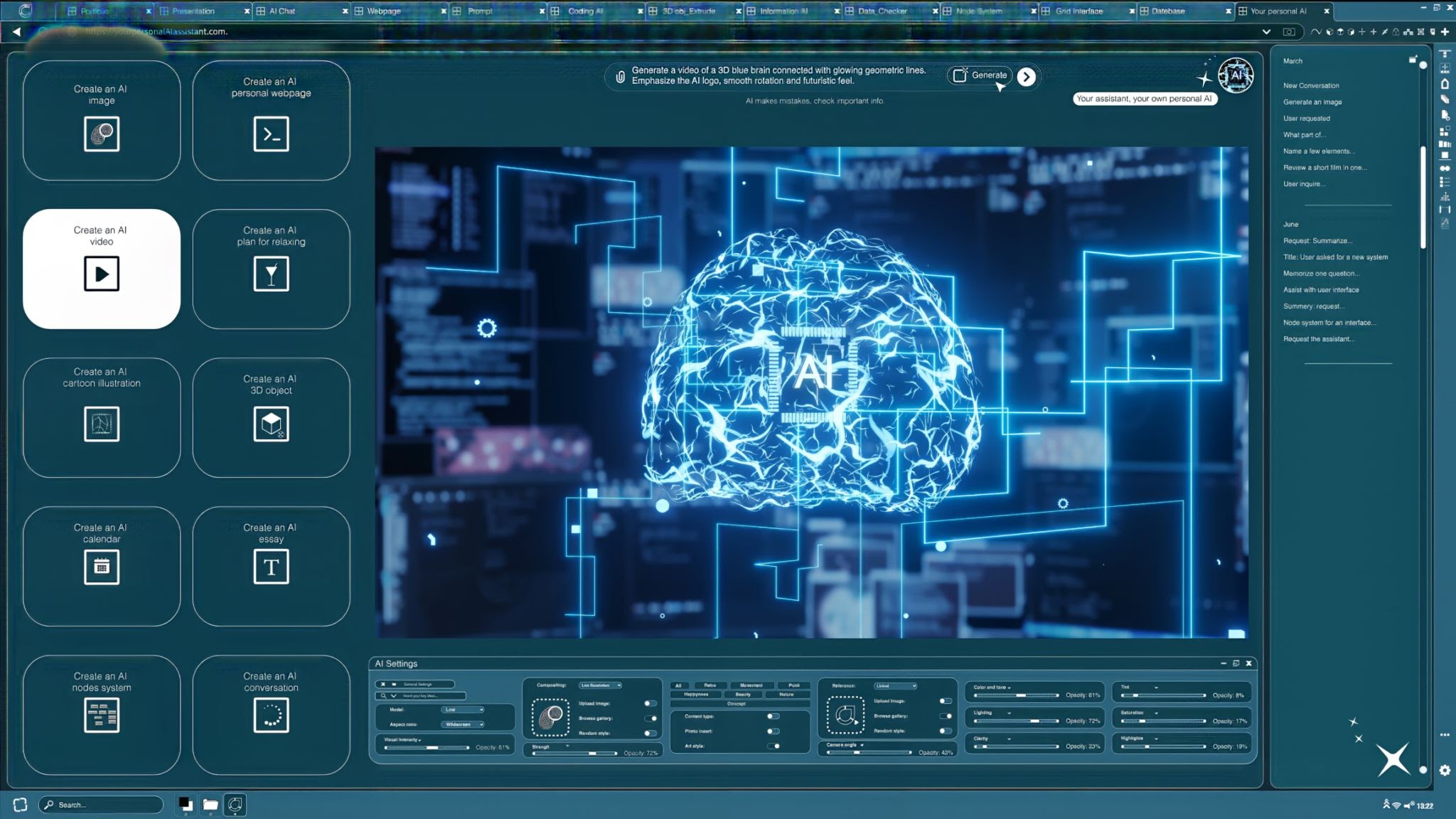
For centuries, visual art and design were defined by the physical medium. A creator’s skill was measured by their ability to manipulate paint, sculpt stone, or precisely lay ink on paper. The digital revolution introduced software like Photoshop, which mirrored these physical tools on a glass screen, but the creative source still relied entirely on the human hand. Today, we are moving past the digital replication of physical tools into an era of computational creation.
Art and Design Technology (ArtTech) is fusing human imagination with algorithmic execution. Driven by generative neural networks, real-time rendering engines, and cryptographic tracking, the design landscape is transitioning from a manual craft into an interactive partnership between human intent and computer generation.
Generative AI and Prompt-to-Image Engines
The most disruptive shift in visual culture since the invention of the camera is the rise of generative artificial intelligence models like Midjourney, Stable Diffusion, and specialized corporate design systems.
- Ideation at Hyper-Speed: Designers no longer begin with a blank page. In industrial, concept, or fashion design, creators use generative models to rapidly iterate ideas. By typing a descriptive prompt, a designer can generate hundreds of high-fidelity concept variations—such as a "stealth-concept athletic shoe using organic lattice structures"—in seconds, compressing the initial brainstorming phase from weeks to minutes.
- Neural Style Transfer: Machine learning models can isolate the artistic style of a historical painter or specific branding guidelines and apply it flawlessly to a new digital canvas. This allows studios to maintain perfect stylistic consistency across thousands of unique visual assets for video games, marketing campaigns, or animated content.
Parametric and Algorithmic Design
In product design, architecture, and user experience, technology is shifting creation away from drawing static shapes toward writing computational rules.
- Biomimetic Structure Generation: Using parametric design software, an industrial designer doesn't draw a product; they input constraints (e.g., "design a chair that weighs under 2 pounds, holds 300 pounds, and uses minimal material"). The algorithm runs millions of physics simulations, generating organic, bone-like structures that are structurally optimal yet impossible for a human to design manually.
- Dynamic UX Layouts: Digital interface design has moved past static wireframes. Modern UI/UX platforms leverage AI to analyze real-time user behavior. The software can dynamically adjust layout structures, color contrasts, and button placements based on the individual user's cognitive profiles, engagement levels, and physical accessibility needs.
Spatial Computing and Immersive Prototyping
Spatial computing headsets are moving the design canvas out of a flat 2D screen and dropping it directly into the 3D physical environment.
- Virtual Sculpting: Artists can don XR (Extended Reality) headsets and use haptic controllers to sculpt digital clay in a 1:1 physical scale. This allows automotive designers or character artists to walk around their creations, evaluating scale, aerodynamic curvature, and proportions naturally before sending the file to a 3D printer.
- Real-Time Ray-Traced Architectural Previews: Architects utilize game engines to build hyper-realistic virtual twins of buildings. Clients can wear a VR headset and walk through a proposed home before construction starts, watching how natural sunlight moves across the rooms at different times of the day based on mathematically accurate light simulations.
Cryptographic Provenance and Digital Art Value
Historically, digital art had an economic flaw: it was infinitely reproducible with a perfect copy-paste, making ownership nearly impossible to enforce. Blockchain technology introduced digital scarcity.
- Immutable Digital Provenance: By minting a piece of digital art as a Non-Fungible Token (NFT) on a blockchain, the artist creates a legally binding, publicly verifiable digital certificate of authenticity. It traces the exact provenance of the artwork from the creator's digital wallet through every subsequent owner.
- Automated Secondary Royalties: Smart contracts embedded within digital artwork completely alter creative economics. When a digital artist sells an artwork, the contract can be programmed to automatically route 10% of all future resale values back to the artist's wallet instantly, bypassing traditional gallery middlemen and ensuring artists profit long-term from their market appreciation.
The Outlook
The integration of technology into art and design is redefining the nature of skill. As algorithms take over the execution of drawing, rendering, and modeling, the competitive advantage shifts entirely back to the concept. Technology is turning the designer into a high-level curator of algorithmic possibilities, unlocking a future where the speed of creation matches the speed of thought.





Comments