
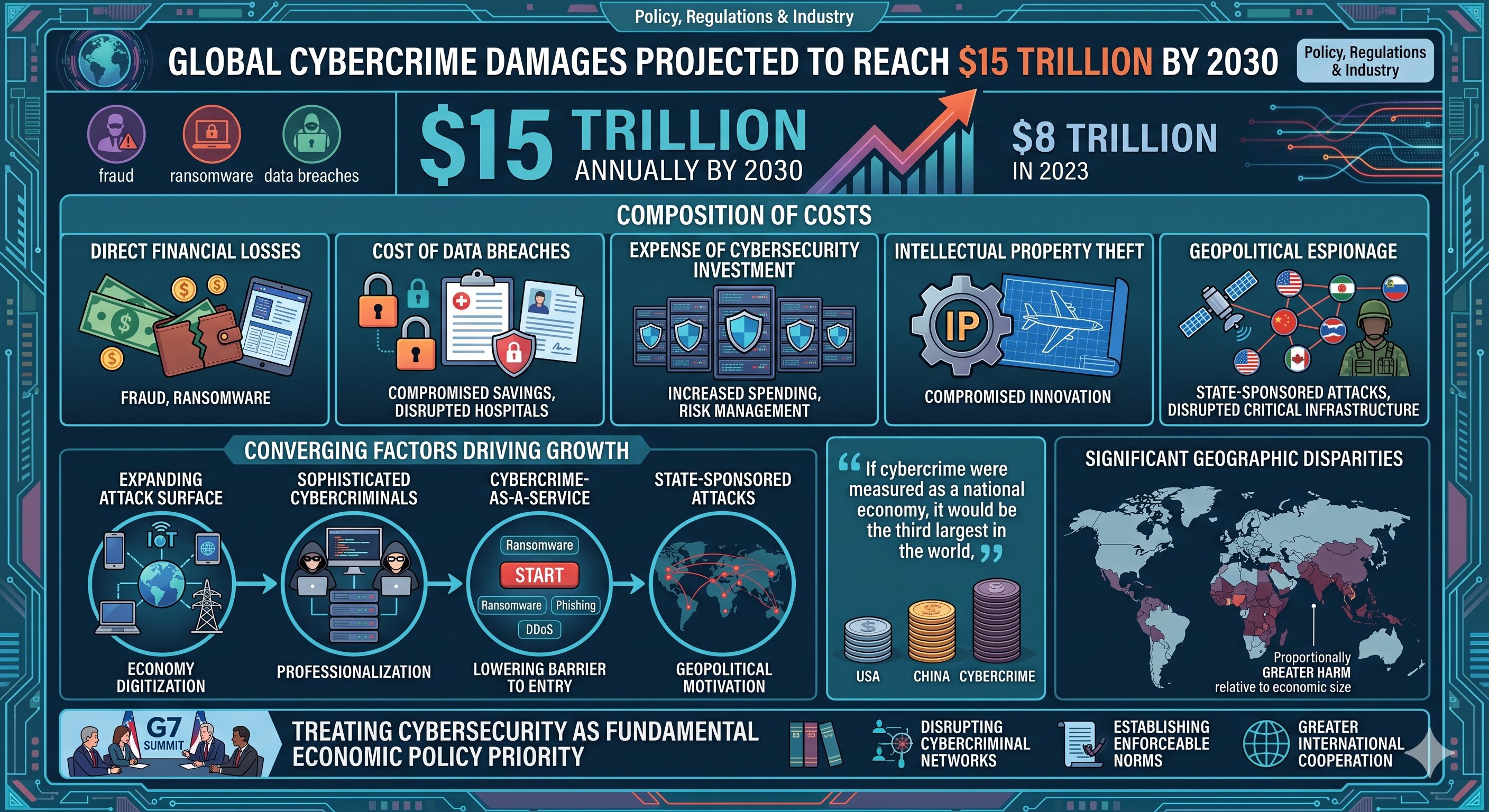
Global Cybercrime
Damages Projected to Reach $15 Trillion by 2030
Category:
Policy, Regulations & Industry
A
comprehensive analysis by a leading cybersecurity research organization
projects that the global economic cost of cybercrime will reach $15 trillion
annually by 2030, up from an estimated $8 trillion in 2023. The staggering
figure encompasses direct financial losses from fraud and ransomware, the cost
of data breaches, the expense of cybersecurity investment, and the longer-term
economic drag of intellectual property theft and espionage.
The report
attributes the projected growth in cybercrime costs to several converging
factors: the continued expansion of the attack surface as more aspects of the
economy become digitized, the growing sophistication and professionalization of
cybercriminal organizations, the rise of cybercrime-as-a-service platforms that
lower the barrier to entry for would-be criminals, and the increasing
geopolitical motivation of state-sponsored attacks.
"If
cybercrime were measured as a national economy, it would be the third largest
in the world," said report author Dr. Marcus Webb. "These numbers
represent real harm to real people — stolen savings, disrupted hospitals,
compromised critical infrastructure, and undermined trust in digital
systems."
The report
also notes significant geographic disparities in cybercrime impact, with
developing nations often suffering proportionally greater harm relative to
their economic size due to weaker cyber defenses and lower levels of
cybersecurity awareness.
The analysis
underscores the case for treating cybersecurity as a fundamental economic
policy priority rather than a purely technical matter, and calls for greater
international cooperation in disrupting cybercriminal networks and establishing
enforceable norms of responsible state behavior in cyberspace.





Comments