
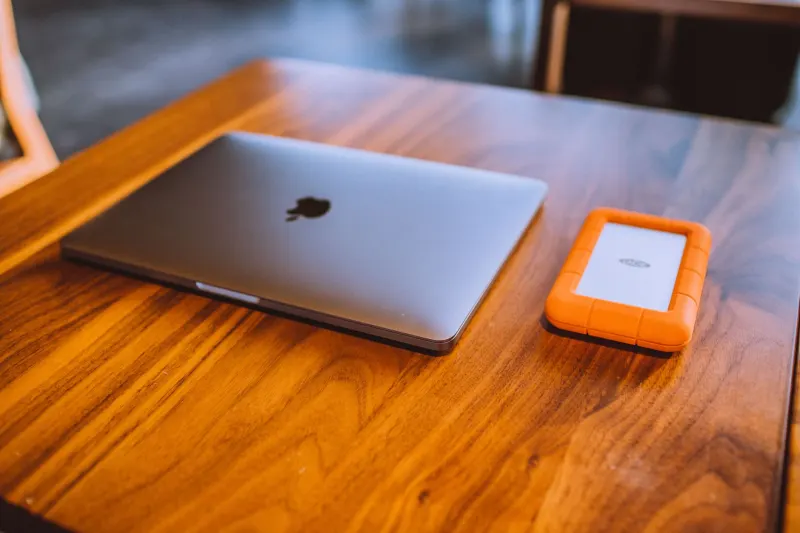
Seagate has introduced a new external storage solution called the FireCuda Forge, designed to blend the performance benefits of a solid-state drive with the affordability and high-capacity options of traditional hard drives. The hardware stands out as the first product powered by the company's newly developed Alkemi intelligent storage platform. This system learns how a user accesses information and automatically relocates active or frequently used files over to the faster solid-state storage component.
Hybrid storage concepts are not entirely new, as Seagate has historically marketed various hybrid drives featuring integrated flash memory over the decades. Unlike traditional network attached storage setups that cache frequently accessed data temporarily, the FireCuda Forge operates under a different architecture. The Alkemi technology employs machine learning algorithms to dynamically shift data between the hard drive and the user-supplied SSD based on ongoing workloads and specific task requirements. As workflows shift, files reorganize automatically across the dual drives while continuing to appear as a singular unified volume connected to the host computer.
Key takeaways
- The FireCuda Forge offers choices of either an 8TB or 20TB hard drive capacity.
- The hardware is powered by Seagate's new Alkemi intelligent storage platform using machine learning.
- It delivers read speeds up to 2,500MB/s and write speeds up to 2,000MB/s on Windows 11 or macOS 26.
- The device is available now through Seagate's online store, Newegg, and Best Buy.
Pricing and retail configurations
The FireCuda Forge is available immediately through several retail channels, including Seagate’s online store, Newegg, and Best Buy. Buyers can choose between an 8TB hard drive model priced at $699 and a larger 20TB hard drive option retailing for $899. Both mechanical hard drive options included in the unit are user-replaceable. However, the enclosure requires users to supply their own NVMe solid-state drive, a requirement that could substantially increase the total acquisition cost given current market conditions and memory shortages.
Despite the separation of physical media, the intelligent platform ensures that all data appears as just a single drive connected to the computer. Users do not need to manually juggle multiple partitions or figure out where to store individual files, as the system constantly evaluates user habits and real-time workload needs to optimize file placement behind the scenes.
Performance metrics and system requirements
When paired with compatible operating systems, the hardware delivers robust data transfer rates suited for demanding tasks. The FireCuda Forge supports read speeds reaching up to 2,500MB/s alongside write speeds peaking at 2,000MB/s. To achieve these performance figures, the connected computer must run at least Windows 11 or macOS 26.
The combination of mechanical storage affordability and flash storage responsiveness provides a flexible tier of local storage for power users. By leaving the choice of NVMe SSD up to the buyer while supplying a massive baseline mechanical drive, Seagate aims to bridge the gap between sheer storage volume and high-speed data access.



Comments