

Aviation has long been known as a technologically conservative industry, prioritizing time-tested reliability over cutting-edge unpredictability because human lives are constantly at stake. For decades, the foundational rule of flight safety meant that human hands remained firmly on the controls and human judgment guided every air traffic decision. However, artificial intelligence is now making rapid inroads into the skies, promising to completely transform the economics of air travel and how people and cargo move through the air. From pilotless cargo flights and electric vertical takeoff and landing aircraft to predictive air traffic management software deployed by federal regulators, these technological shifts are arriving at an unprecedented speed and raising hard questions about automation, oversight, and trust.
The push toward automation gained major public attention when US transportation secretary Sean Duffy posted a video highlighting SMART, a new AI-infused air traffic management system intended to save time, cut back delays, and improve the flying experience. Developed by Boston-based data company Air Space Intelligence, the Strategic Management of Airspace, Routes and Trajectories tool is designed to help air traffic controllers make decisions by using predictive AI to head off scheduling snags. While officials emphasize that the system assists human controllers rather than replacing them, critics, lawmakers, and union representatives have expressed concern over potential software hallucinations and rushed technological deployments following flight schedule disruptions and staffing target reductions.
Key takeaways
- US transportation secretary Sean Duffy introduced the SMART air traffic management tool to reduce delays.
- Joby Aviation completed a 3,200-mile coast-to-coast flight with a Cessna Caravan without human intervention at the controls.
- The FAA lowered its active air traffic controller staffing target to 12,563, citing modern scheduling tools.
- Lawmakers and aviation unions have voiced concerns regarding potential AI software hallucinations and safety risks.
Milestones in Autonomous Flight and eVTOLs
Beyond behind-the-scenes scheduling tools, autonomous flight technology is advancing rapidly on multiple operational fronts. In a striking milestone that underscored the progress of modern flight automation, a single-engine turboprop Cessna Caravan operated by Joby Aviation took off from Buchanan Field Airport in Concord, California, and completed a 3,200-mile cross-country trip to North Carolina without a single human hand touching the controls. Although a safety pilot was on board throughout the journey, no manual intervention was necessary as the aircraft navigated busy airspace, maneuvered around storms, and stopped at various military and regional airfields along the way.
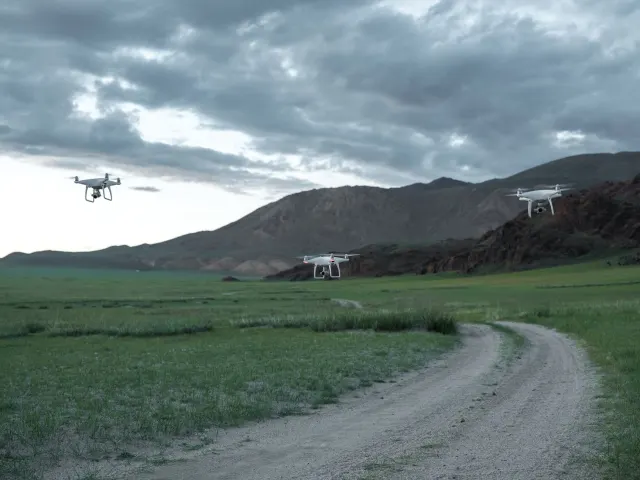
Meanwhile, electric vertical takeoff and landing aircraft, or eVTOLs, are inching closer to commercial viability, highlighted by Joby's point-to-point flights in New York City from John F. Kennedy Airport to multiple Manhattan heliports. These urban demonstrations, alongside similar trials in California and Texas, operate under the federal eVTOL Integration Pilot Program rolled out to showcase modern drone and air taxi capabilities. Delivery giants such as Amazon and Walmart are also rapidly expanding drone delivery networks across hundreds of locations nationwide, testing the limits of traditional aviation regulation and federal waiver frameworks as the industry navigates a complex transition toward a highly automated future.
Regulatory Friction and Industry Concerns
These technological leaps have also met with considerable resistance from regulators, labor unions, and aviation experts who worry about moving too fast. In Europe, aircraft manufacturers Airbus and Dassault previously proposed single-pilot airliners backed by automated copilot systems, an idea strongly opposed by the European Cockpit Association over safety and professional oversight concerns before being ultimately shelved by the European Union aviation safety agency. In the United States, critics point to the Federal Aviation Administration reducing its active air traffic controller staffing target down to 12,563, relying on modern scheduling tools and automated models despite persistent industry concerns over controller shortages and software reliability.
As delivery drones scale up toward hundreds of thousands of daily flights and air taxi operators look toward fully autonomous passenger journeys to achieve economic viability, the debate between Silicon Valley speed and traditional aviation caution intensifies. While proponents argue that predictive tools and automated routing are essential for eliminating midair near misses, runway incursions, and chronic delays, skeptical aviation lawyers, retired personnel, and lawmakers continue to demand rigorous proof and demonstrated safety before trusting critical skyways to autonomous algorithms.





Comments