
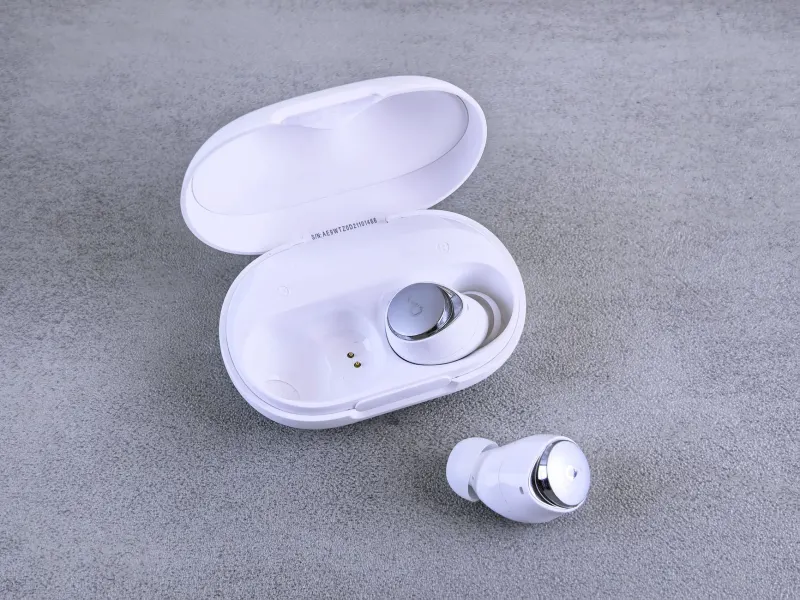
It has been just over ten years since Apple first announced AirPods, marking the tech giant's entry into the fully wireless earbuds market. Revealed alongside the iPhone 7 during the September 2016 Apple event, these wireless buds accompanied the controversial removal of the traditional headphone jack from the iPhone. Over the past decade, AirPods have evolved into a massive seller for Apple, establishing themselves as the benchmark against which competing wireless earbuds are routinely judged. Despite widespread popularity and significant hardware improvements, AirPods represent one of the few consumer technology product lines that have avoided aggressive price hikes.
Key takeaways
- The original AirPods debuted in December 2016 for $159, which is equivalent to roughly $222 when adjusted for current inflation.
- The third-generation AirPods released in October 2011 brought a higher price tag of $179 and added spatial audio support.
- Current AirPods 5 models start at a baseline price of $129, offering a $149 variant with improved battery life and wireless charging.
- All three generations of AirPods Pro have maintained a steady $249 price point with zero variations across releases.
Evolution of pricing across generations
The original AirPods hit retail shelves in December 2016 carrying a $159 price tag. Apple followed up with second-generation AirPods in March 2019, retaining the identical $159 price for the standard model while introducing a wireless charging case option for $199. Customers with first-generation hardware could purchase a standalone wireless charging case for $79. In October 2021, the third-generation AirPods arrived at $179, integrating perks from the Pro line such as shortened stems, spatial audio, and better battery life. This generation marked the only instance where Apple continued selling the previous model alongside newer hardware, keeping the AirPods 2 at $129 until they were finally discontinued when the AirPods 4 launched in September 2024.
The AirPods 4 retained an accessible entry price starting at $129, alongside a $179 model equipped with active noise cancellation and a wireless charging case. The current AirPods 5 lineup debuted in September 2026, preserving the $129 baseline price alongside an upgraded $149 model that features better battery life, stem volume controls, and wireless charging support. Meanwhile, high-end lines have kept steady pricing structures. All three generations of the AirPods Pro, released in 2019, 2022, and 2025, have consistently cost $249 without price variations. The AirPods Max over-ear headphones have likewise held firm at $549 for both their 2020 and 2026 iterations.
Inflation value and modern features
When evaluated against historical inflation, today's AirPods offer considerably more value to consumers. The original 2016 price of $159 equates to about $222 today, while the original 2019 AirPods Pro price of $249 equals roughly $326 at the time of writing. Similarly, the initial $549 price tag of the AirPods Max from December 2020 equals roughly $710 today. Because subscriptions and other consumer hardware items face continuous cost increases, the relatively flat pricing of AirPods makes them effectively cheaper over time. Keeping base models reasonably priced also serves Apple's broader ecosystem strategy, encouraging iPhone users to stay within the brand.
Over the decade, AirPods have accumulated a substantial array of technological enhancements. Early models relied on the W1 chip, while subsequent generations adopted the H1 chip for hands-free Siri commands. More recent hardware utilizes the H2 chip, enabling Adaptive Audio, Conversation Awareness, and head-tracking controls that let users nod to accept a call or shake their head to dismiss alerts. AirPods Pro 3 models can even track user heart rates without requiring an Apple Watch. Furthermore, charging cases have integrated built-in speakers for Find My tracking, transitioned from Lightning ports to USB-C connectivity, and support Apple Intelligence features when paired with a compatible iPhone.







Comments