
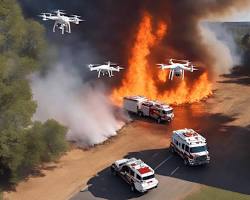
In an era of increasing environmental volatility, traditional disaster response—characterized by reactive measures after an event has occurred—is being replaced by "Sentinel Systems." These are hyper-connected networks of sensors, satellites, and AI-driven predictive models designed to mitigate, monitor, and manage catastrophes before and while they unfold.
Predictive Intelligence and Early Warning
The shift from reaction to anticipation is powered by the integration of big data and real-time monitoring.
- Atmospheric & Seismic Sensor Fusion: By deploying dense grids of low-cost IoT sensors (seismometers, moisture detectors, water-level gauges) across vulnerable regions, we create a "digital nervous system" for the planet. AI algorithms ingest this data to identify micro-anomalies—subtle shifts in soil moisture that precede a landslide or minor seismic tremors that signal an impending earthquake.
- Satellite Constellations: High-revisit satellite imagery allows for real-time monitoring of wildfire spread, flood inundation, and storm surges. Through computer vision, these platforms automatically map affected zones, calculate the severity of damage, and identify the safest evacuation routes for both citizens and emergency responders.
Resilient Digital Infrastructure
Disasters often strike the very infrastructure (power grids, telecommunications) needed for the response. Modern disaster management relies on "self-healing" systems.
- Mesh Networking: In a crisis, traditional cellular networks often collapse. AI-managed mesh networks allow devices to communicate directly with one another, creating a decentralized, temporary web of connectivity that ensures emergency alerts reach people even when centralized infrastructure is offline.
- Digital Twins for Urban Resilience: Cities are creating "Digital Twins" to stress-test their infrastructure against simulated disasters. By modeling how a specific district handles a 100-year flood or a massive power surge, urban planners can harden critical infrastructure—strengthening levees, rerouting power, and designing better drainage—long before a disaster strikes.
Autonomous Crisis Response
When a disaster occurs, every second is vital. Autonomous agents are taking on the most dangerous initial tasks.
- Search and Rescue Robotics: Swarms of autonomous drones equipped with thermal imaging and lidar can scan vast, debris-filled areas to locate survivors much faster than human teams. They can deliver medical supplies, communication devices, or water to trapped individuals in zones that are physically inaccessible to human responders.
- Algorithmic Logistics: Post-disaster resource allocation is a complex optimization problem. AI platforms coordinate the massive logistics of food, water, and medical aid, dynamically rerouting supply chains in response to blocked roads or changing environmental conditions to ensure that aid arrives where it is needed most.
The Outlook
The future of disaster management is resilience by design. By moving from a "wait-and-see" approach to a "predict-and-protect" paradigm, we are fundamentally reducing the human and economic cost of natural and man-made disasters. Technology is providing the foresight to anticipate, the agility to react, and the strength to recover.





Comments