
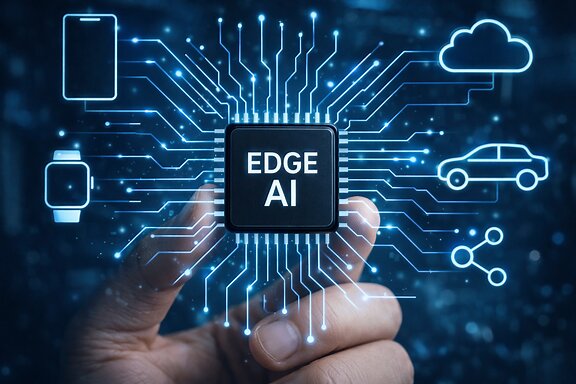
Smart devices are becoming significantly more intelligent as advancements in edge processing enable artificial intelligence capabilities directly on devices. From smartphones and wearables to smart home systems and industrial equipment, edge AI is revolutionizing how data is processed, analyzed, and utilized in real time.
Traditionally, AI-powered applications relied heavily on cloud computing infrastructure to process information and generate insights. While cloud-based systems remain important, the growing demand for faster responses and enhanced privacy has accelerated the adoption of edge processing technologies. By performing computations locally, smart devices can deliver intelligent experiences without constantly sending data to remote servers.
One of the biggest advantages of edge AI is reduced latency. Processing data directly on a device allows applications to respond instantly to user actions and environmental changes. This capability is particularly important for real-time applications such as voice assistants, autonomous systems, augmented reality experiences, and smart security solutions.
Smartphones are among the primary beneficiaries of edge AI innovation. Modern devices now include dedicated AI processors capable of handling tasks such as image recognition, language translation, voice processing, and predictive recommendations directly on the device. This improves performance while reducing dependence on internet connectivity.
Wearable technology is also evolving through advanced edge processing capabilities. Smartwatches, fitness trackers, and health monitoring devices can analyze biometric data in real time, providing users with immediate insights related to fitness, wellness, and personal health. Local processing enhances responsiveness while helping protect sensitive personal information.
The smart home industry is leveraging edge AI to create more intelligent and responsive living environments. Smart speakers, security cameras, thermostats, lighting systems, and connected appliances can process data locally to automate tasks, improve security, and personalize user experiences. This results in faster operation and greater reliability even during network interruptions.
In the automotive sector, edge processing plays a critical role in enabling intelligent vehicle functions. Advanced driver-assistance systems and connected vehicle technologies rely on real-time data analysis from cameras, sensors, and onboard systems. Local AI processing helps vehicles react quickly to changing road conditions and enhances overall safety.
Industrial organizations are increasingly deploying edge AI solutions to improve operational efficiency and productivity. Smart sensors and connected machinery can analyze performance metrics, detect anomalies, and predict maintenance requirements without relying on centralized cloud infrastructure. This supports faster decision-making and reduces downtime across manufacturing environments.
Healthcare technology is another area benefiting from edge AI advancements. Medical devices, remote monitoring systems, and wearable health solutions can process patient data locally to provide timely alerts and insights. This enables healthcare providers to deliver faster interventions while maintaining high standards of data privacy and security.
Cybersecurity is becoming increasingly important as smart devices become more connected. Edge AI enhances security by enabling devices to detect unusual activities, identify threats, and respond to potential attacks in real time. Processing data locally reduces exposure to external threats while strengthening overall system protection.
Advancements in semiconductor technology are accelerating the growth of edge AI capabilities. New generations of AI chips, neural processing units (NPUs), and energy-efficient processors allow devices to run increasingly sophisticated machine learning models while maintaining low power consumption. These innovations are expanding the range of applications that can benefit from on-device intelligence.
The rise of 5G connectivity is further supporting the adoption of edge processing technologies. Combining high-speed networks with local AI processing enables new use cases such as smart cities, connected infrastructure, immersive digital experiences, and advanced IoT ecosystems. This combination provides the foundation for highly responsive and intelligent digital services.
Privacy has become a major factor driving edge AI adoption. Consumers and organizations are increasingly concerned about how data is collected and stored. Processing information locally minimizes the need to transfer sensitive data to external servers, helping organizations comply with privacy regulations and build user trust.
Machine learning models optimized for edge environments are becoming more powerful and efficient. Developers are creating lightweight AI models capable of running on resource-constrained devices while delivering high levels of accuracy and performance. These advancements are expanding AI accessibility across a broader range of products and industries.
Industry analysts predict that edge AI will become a foundational component of future smart devices. As demand for intelligent, responsive, and secure technologies continues to grow, manufacturers are expected to integrate advanced AI capabilities into an increasing number of consumer and enterprise products.
As organizations continue investing in digital transformation initiatives, edge processing is emerging as a critical technology for the next generation of smart devices. By enabling real-time intelligence, improving privacy, reducing latency, and enhancing user experiences, edge AI is reshaping the future of connected technology worldwide.





Comments