
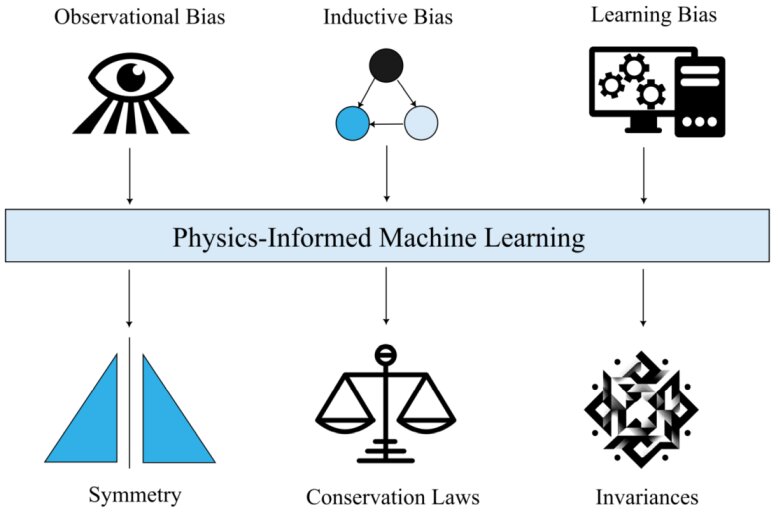
Machine Learning is rapidly becoming a cornerstone technology in particle physics, helping scientists process massive datasets, improve simulations, and accelerate discoveries about the fundamental nature of matter and energy. Recent research suggests that foundation models—large machine learning systems trained on extensive scientific datasets—could fundamentally reshape how particle physics research is conducted.
Particle physics experiments generate enormous amounts of data. Facilities such as CERN and the Large Hadron Collider produce petabytes of information every year as scientists study particle collisions and search for new phenomena beyond current scientific theories.
Traditionally, analyzing this data required specialized algorithms and extensive computational resources. However, new machine learning foundation models are demonstrating the ability to learn complex particle interactions, recognize hidden patterns, and perform scientific analysis with unprecedented speed and accuracy.
Researchers have recently introduced particle-flow foundation models capable of understanding the relationships between particles produced during high-energy collisions. These models can process vast amounts of experimental data while reducing computational costs and improving prediction capabilities.
One of the most promising applications is event reconstruction, where machine learning systems identify and classify particles generated during collisions. Advanced AI models can analyze detector signals, reconstruct particle trajectories, and help scientists distinguish rare events from background noise more efficiently than conventional methods.
Machine learning is also improving particle physics simulations. Simulating particle interactions is traditionally one of the most computationally intensive aspects of research. Foundation models can generate accurate approximations of these simulations much faster, enabling researchers to test scientific theories and analyze experimental outcomes more effectively.
Beyond data analysis, AI-powered systems are assisting researchers in discovering new physics phenomena. By identifying subtle patterns that may be difficult for humans to detect, machine learning models can help uncover evidence related to dark matter, unknown particles, and physics beyond the Standard Model.
Experts believe that foundation models could become as transformative for particle physics as large language models have become for natural language processing. Instead of training separate AI systems for each scientific task, researchers envision universal physics models capable of supporting multiple applications, including simulation, anomaly detection, particle identification, and theoretical exploration.
The growing integration of machine learning into particle physics reflects a broader trend across scientific disciplines, where AI is increasingly becoming an essential research tool. As foundation models continue to improve, they are expected to accelerate discoveries that could deepen our understanding of the universe and its fundamental laws.
The emergence of machine learning foundation models marks a significant step toward a future where artificial intelligence and scientific research work hand in hand, enabling breakthroughs that were previously beyond reach.





Comments