
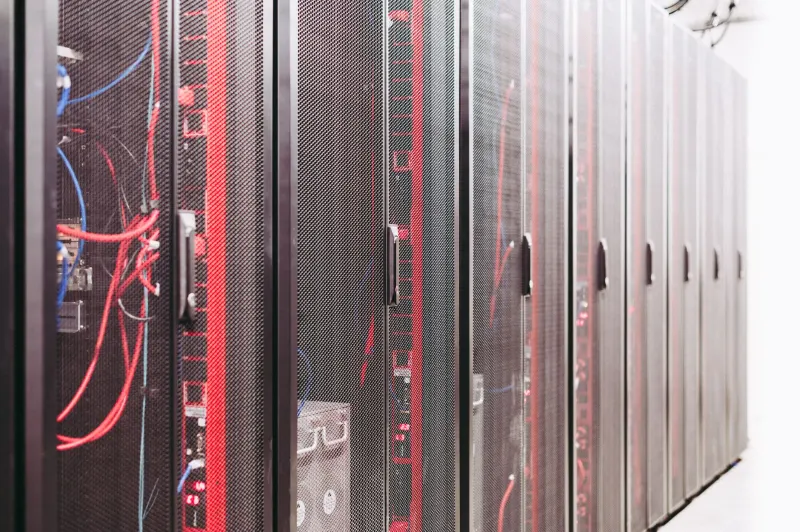
China's Envision has officially put an integrated 800-volt direct-current power architecture into commercial operation at an artificial intelligence facility located in Inner Mongolia. The deployment sits at the Galaxy AI campus in Ulanqab, where trials utilizing its Dubhe controller and supporting energy model first kicked off in August 2026. The company positions this installation as a world first for commercial deployment of this specific power configuration, though independent performance metrics have yet to be released publicly.
Conventional data center facilities typically step down and convert incoming electricity through multiple complex stages before it finally reaches servers and hardware accelerators, which introduces conversion losses and demands extra equipment. Envision's novel architecture bypasses this multi-step approach by deploying a solid-state transformer that converts 10-kilovolt medium-voltage alternating current straight into an 800-volt direct-current distribution line. According to the company, this streamlined arrangement shrinks conversion stages, boosts overall electrical efficiency, and significantly reduces the physical floor space needed for power equipment inside data centers. Additionally, a higher-voltage distribution network slashes the amount of copper needed for heavy cabling as computing installations scale up rapidly.
Key takeaways
- Envision deployed an 800V DC power architecture commercially at the Galaxy AI campus in Ulanqab.
- The design utilizes solid-state transformers to convert 10kV grid power directly into 800V DC supply.
- Integrated battery storage handles rapid power swings from GPUs and offers temporary backup.
- The company has grander ambitions, including a 5-gigawatt renewable initiative named Mission Gobi by 2030.
Integrating Battery Storage and High-Density Racks
The newly deployed infrastructure also incorporates built-in battery storage designed to react instantaneously when processor demands fluctuate, while concurrently supplying temporary backup during sudden grid interruptions. Envision states that this storage array can deliver immediate support within seconds and sustain backup capability across windows lasting several minutes. A specialized controller coordinates the solid-state transformer and batteries down to the millisecond to handle sharp spikes in electricity consumption driven by dense clusters of GPUs.
Because AI workloads create massive, sudden swings in power demand, managing electricity consumption tightly is critical for high-density computing hardware. This architecture accommodates higher-density server racks, giving facility operators the capability to pack significantly more computing power into a smaller floor footprint. However, industry observers note that independent testing and verified measurements quantifying exact efficiency gains, installation costs, or financial savings compared to traditional power setups have not yet been made public.
Expanding Future Capacity and Mission Gobi
Envision's footprint at the Galaxy facility is projected to scale up to 3 gigawatts, with the company asserting that its ultimate capacity could power up to one million AI accelerators. Beyond this initial site, the company plans to roll out the power technology through an initiative known as Mission Gobi. This program aims to achieve 5 gigawatts of renewable-powered computing capacity by the year 2030.
Mission Gobi targets remote desert locations where Envision anticipates that local renewable generation paired with deep energy storage will support massive computing infrastructure developments. While the hardware is engineered to integrate cleanly with renewable energy sources and balance shifting computational loads, the architecture's sustained performance under full-load conditions across varied hardware layouts still awaits detailed independent verification.





Comments